Flip-Lid vs. Dust Cap: How to Seal Your Pours
Two ways to seal a pour spout, two different workflows. A clear-eyed comparison of flip-lid pourers and snap-on dust caps — and when to reach for each.
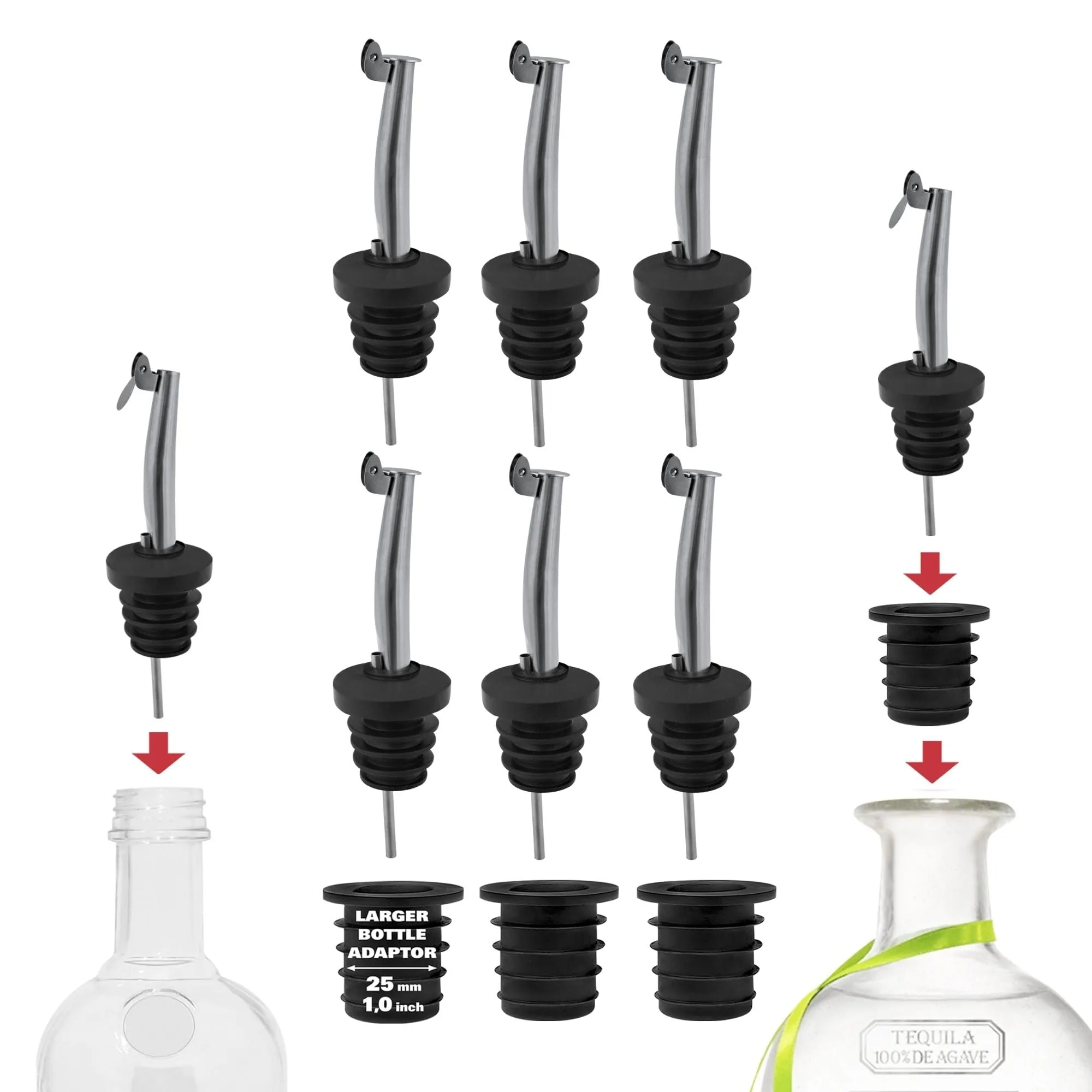
There are two honest ways to keep a pour spout sealed between pours, and they solve the same problem from opposite directions. A flip-lid pourer builds the seal into the spout itself. A dust cap adds the seal on top of a spout you already have. Both work. Which one is right depends on how your bar actually runs.
The flip-lid pourer
A flip-lid pour spout is a single integrated tool: a stainless or plastic pourer with a small hinged lid at the tip. You flip it open to pour, flip it shut when you set the bottle down. There is nothing to lose, nothing to misplace, and the seal is always attached to the bottle it protects.
Where it shines: - Speed bars and high-volume rails. One motion to open, one to close. No reaching for a separate piece. - Bottles in constant rotation. If a spout is opened dozens of times a shift, an integrated lid is faster than a cap that has to come fully off. - A clean, intentional look. Matching flip-lid pourers across a rail read as a deliberate, well-run bar.
The trade-off: you are committing to a specific pourer. If you already love your current spouts, you are replacing them, not upgrading them.
The dust cap
A dust cap is a separate flexible cover that snaps over the spout you already have. It does not change your pourer, your pour speed, or your spout calibration. It just seals the opening when the bottle is at rest.
Where it shines: - Back-bar and slow-moving bottles. Bottles that sit for hours or days between pours benefit most from a full seal, and the half-second to lift a cap is irrelevant when you pour from it twice a night. - Keeping your existing setup. If your spouts are dialed in, a cap protects them without disturbing them. - Maximum seal and pest defense. A cap covers the entire spout tip, which is the most thorough barrier against dust and fruit flies. - Cost and coverage. A 24-pack caps an entire bar for the price of a couple of drinks.
The trade-off: it is a separate piece, so it can be set down and momentarily misplaced during a rush. On a true speed rail, that friction adds up.
How to choose
It is not actually either/or — most well-run bars use both.
| Situation | Reach for |
|---|---|
| High-volume speed rail | Flip-lid pourer |
| Back-bar and slow movers | Dust cap |
| Sweet liqueurs and syrups (fly magnets) | Dust cap |
| You want one matched, integrated look on the rail | Flip-lid pourer |
| You love your current spouts and just want them sealed | Dust cap |
Put flip-lid pourers on the bottles your hands never leave, and dust caps on everything that sits and waits. The rail stays fast; the back bar stays sealed. That is the whole system — and it is why we make both.