Why Dust Caps Matter Behind the Bar
An open pour spout is an open door. Here is what actually gets into your bottles overnight, and why a cap is the cheapest upgrade on the back bar.
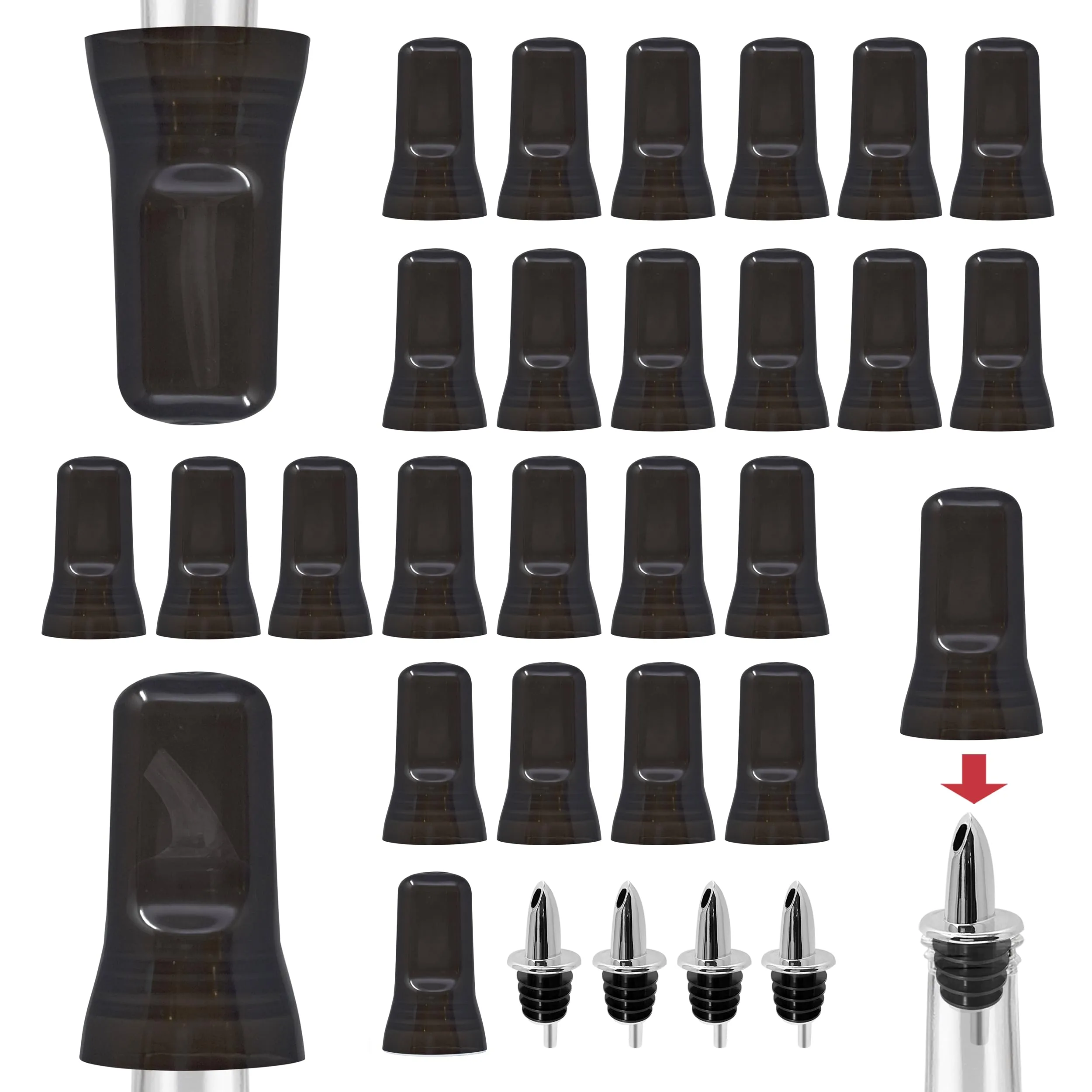
Walk behind almost any bar at close and you will see the same thing: a row of speed-rail bottles, each fitted with a metal pour spout, each spout wide open to the room. It looks normal because it is normal. It is also the single most overlooked hygiene gap in the building.
A pour spout is a precision tool. It is also a funnel pointed straight into your most expensive inventory. Whatever is in the air between last call and open — dust, kitchen grease, fruit-fly traffic, the fine grit that settles on every flat surface overnight — has a clear path into the bottle. You do not see it happen. You taste it later, in a well vodka that has gone slightly flat, or a syrup that crusted at the tip.
What actually gets in
The honest answer is: more than you would like.
- Dust and airborne grit. Bars are dusty rooms. Glassware, napkins, and foot traffic all shed particles that drift down and land on open spouts.
- Fruit flies and gnats. A sticky pour spout on a sweet liqueur is a beacon. Once they find it, they keep coming back — and they do not always leave.
- Air. An open spout is an open air channel. A dust cap covers the spout tip to keep dust and insects out. Do not count on it to keep air away from what is in the bottle.
- Sticky spout tips. The last drops at the spout tip dry into a tacky residue that pours unevenly and collects dust. Wipe the tips at close, cap or no cap.
None of these ruin a bottle on night one. They compound. Over a week, on a slow-moving back-bar bottle, a capped spout collects far less of it than an open one.
Why a cap, specifically
You have options. You could pull every spout each night, rinse them, and refit them at open — which nobody does, because it is twenty minutes of work that disappears the moment the first ticket lands. You could swap to bottles with their original caps, and lose the speed a pourer gives you.
Or you can leave the pour spout exactly where it is and snap a dust cap over the top. That is the whole pitch. The Universal Dust Cap flexes onto a standard metal or plastic pourer, covers the opening, and comes off in the half-second it takes to make a drink. The spout stays installed and ready, and dust and flies stay off it.
It is not a glamorous tool. It is the kind of thing you stop noticing a week after you start using it — which is exactly the point. Good bar hygiene is mostly invisible. The cap just makes the invisible part actually happen.
The math
A 24-pack of dust caps covers a full speed rail and most of a back bar for the cost of two cocktails. Set against one fruit-fly incident in front of a guest, it is not a close call.
Cap your spouts. Your bottles — and the people drinking from them — will taste the difference, even if they never know why.